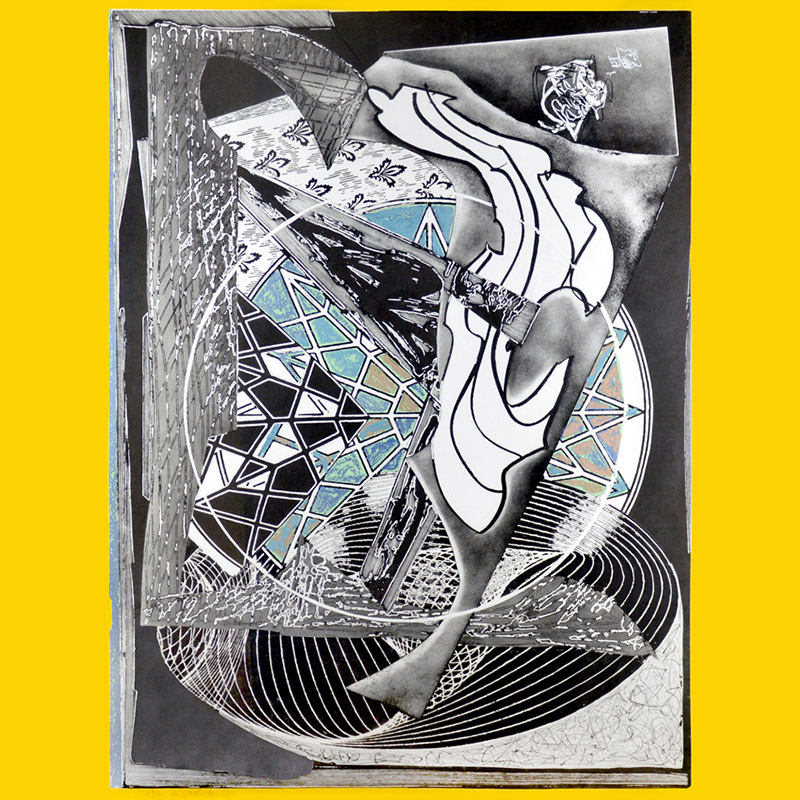
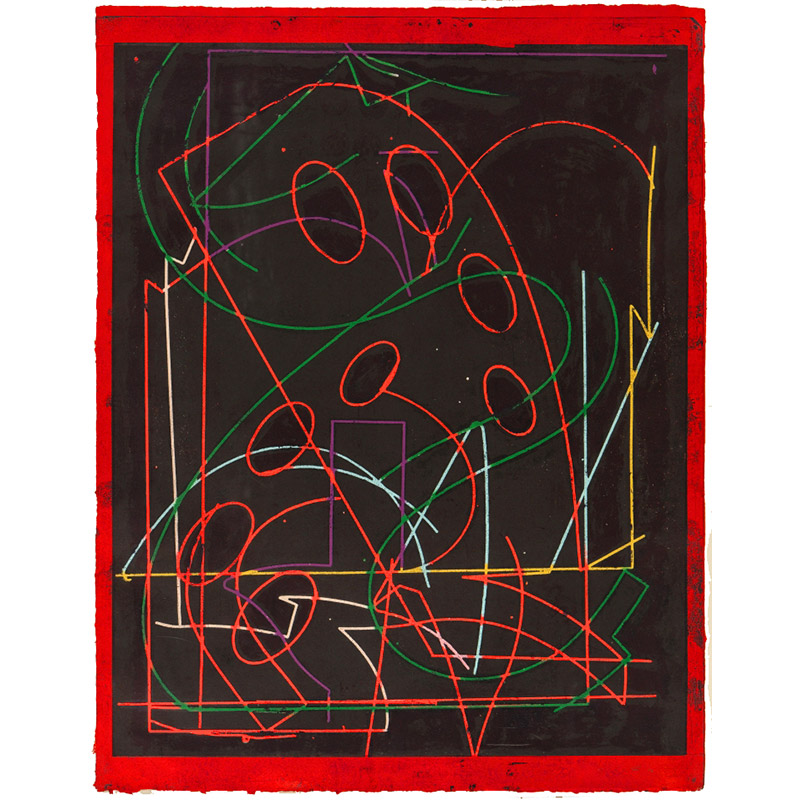

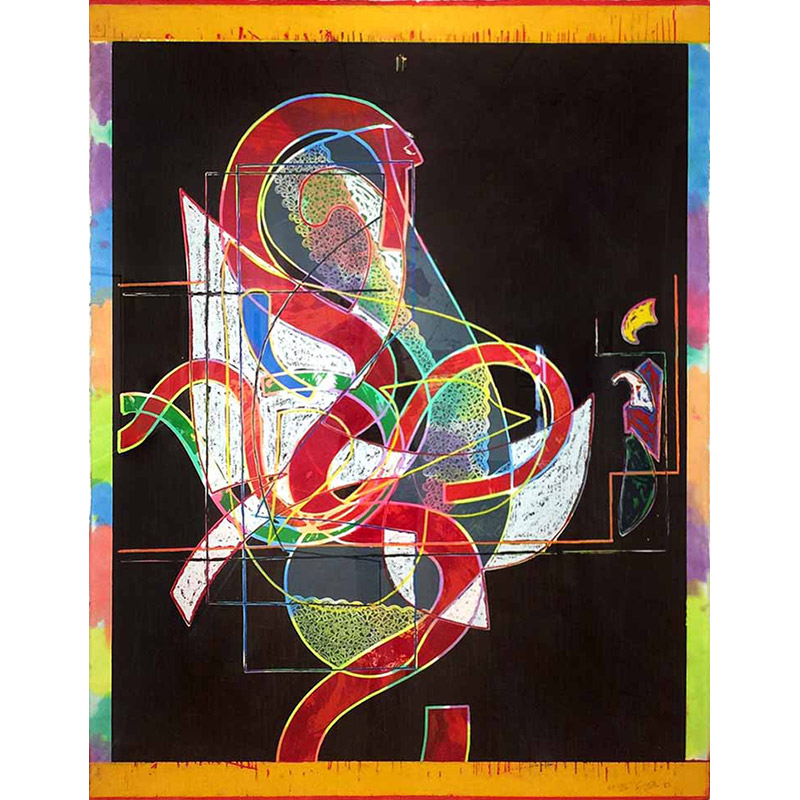
If you are trying to determine whether a Frank Stella print is original, the first step is identifying the exact documented edition—not simply checking for a signature or edition number.
Frank Stella created more than 300 documented editioned prints over the course of his career, ranging from early lithographs and screenprints to technically complex works incorporating etching, aquatint, relief printing, collage, hand-coloring and other techniques. Correct identification requires comparing the physical artwork with the known specifications for that particular edition.
Important details can include the Axsom catalogue raisonné reference, printing technique, paper, dimensions, signature, edition or proof designation, printer, publisher, workshop markings and provenance.
Original Frank Stella Print vs. Reproduction
An original Frank Stella print was created as a work of graphic art using techniques such as lithography, screenprinting, etching, aquatint, woodcut or relief printing.
A reproduction, poster or later photographic print may reproduce Stella’s imagery without being part of the original documented edition.
The difference can have a substantial effect on identification and market value.
A work should not be considered original simply because it carries Stella’s name, a signature or an edition number. The physical artwork should correspond with the documented specifications for the edition.
Check the Frank Stella Axsom Catalogue Raisonné
One of the most important tools for researching Frank Stella prints is the catalogue raisonné associated with Richard H. Axsom.
An Axsom number can help identify:
- Title
- Date
- Series
- Medium
- Paper
- Dimensions
- Edition structure
- Proof information
- Printer
- Publisher
The expanded 2016 catalogue by Richard H. Axsom with Leah Kolb documents more than 300 editioned Frank Stella prints.
An Axsom number identifies a documented work or edition, but it does not independently authenticate the physical impression. The actual print should still correspond with the documented specifications.
Check the Frank Stella Signature and Edition Number
Many original Frank Stella prints were hand-signed and numbered, but the form and placement of the inscription can vary considerably by edition.
A documented Stella print may include:
- Standard numbered edition
- Artist’s Proof
- Printer’s Proof
- Color Trial Proof
- State proof
- Workshop proof
- Other documented proof designation
For example, the National Gallery of Art records a color trial proof of Delaware Crossing with the inscription CTP-B 1/3 F. Stella ’71, rather than a conventional standard edition number.
That is why a Stella signature should always be evaluated in the context of the specific documented edition.
Check the Paper, Dimensions and Printing Technique
Frank Stella used an unusually wide range of papers, supports and printing methods.
Depending on the work, an original Stella print may involve:
- Lithography
- Screenprinting
- Etching
- Aquatint
- Woodcut
- Linoleum block
- Relief printing
- Collage
- Hand-coloring
- Multiple techniques combined in one work
The paper and dimensions should also correspond with the documented edition.
A mismatch in sheet size, support, printing technique or edition structure may warrant further investigation.
Look for Gemini G.E.L. and Tyler Graphics Marks
Workshop information can be especially important when identifying Frank Stella prints.
Stella worked extensively with major print workshops including Gemini G.E.L. and Tyler Graphics.
Gemini publications may include:
- Blindstamps
- Embossed copyright marks
- Reverse workshop stamps
- Workshop numbers
- Separate Gemini catalogue references
For example, the National Gallery records Black Series I with an Axsom reference, Gemini G.E.L. catalogue reference, Gemini blindstamp and reverse workshop stamp.
A single Stella print can therefore legitimately have both an Axsom number and a separate workshop catalogue number. These references are complementary rather than contradictory.
Signed vs. Unsigned Frank Stella Prints
A hand-signed Frank Stella print generally occupies a different market from an unsigned example, but signature alone does not establish authenticity.
The edition number, proof designation, paper, dimensions, medium, printer, publisher and catalogue information should all correspond with the documented work.
Some trial proofs, workshop impressions and related material may have inscription formats that differ from the standard edition.
Correct identification should therefore focus on the complete set of physical and documentary details.
What Does an Axsom Number Mean?
An Axsom number is the catalogue raisonné reference used to identify a documented Frank Stella print.
It can help establish the title, date, medium, dimensions, edition structure, printer and publisher.
Some Stella works may also carry separate Gemini G.E.L. or Tyler Graphics catalogue numbers because they were documented within both Stella’s artist-specific catalogue raisonné and the workshop’s own records.
An Axsom number does not prove that a physical print is authentic by itself. The artwork should match the specifications associated with that reference.
How to Identify a Frank Stella Proof
Frank Stella’s printmaking includes a wide range of proof types.
Depending on the edition, you may encounter:
- Artist’s Proofs
- Printer’s Proofs
- Color Trial Proofs
- Trial proofs
- State proofs
- Workshop proofs
Proofs can differ from the standard edition in color, paper, state or inscription.
For example, museum records document Stella color trial proofs with specific Axsom numbers, edition inscriptions and Gemini G.E.L. workshop markings.
The proof designation should be compared with the documented edition information before drawing conclusions about rarity or value.
Why Provenance Matters
Provenance is the documented ownership history of an artwork.
Useful provenance may include:
- Gallery invoices
- Auction records
- Collection history
- Exhibition labels
- Estate documentation
- Workshop records
- Previous appraisals
- Catalogue raisonné information
Provenance does not replace examination of the physical work, but it can strengthen the identification and marketability of a documented Frank Stella print.
Does a Certificate of Authenticity Prove a Frank Stella Is Original?
A certificate of authenticity can be useful supporting documentation, but it should not be relied upon by itself.
A stronger evaluation considers the Axsom catalogue reference, signature, edition number, proof designation, paper, dimensions, printing technique, printer, publisher, workshop markings and provenance together.
The certificate should support the physical and catalogue evidence rather than replace it.
What Should I Send to Identify My Frank Stella?
If you are unsure whether your Stella is an original print, reproduction or other edition, send us:
- A clear photograph of the front
- A photograph of the reverse
- Close-ups of the signature
- Edition number or proof designation
- Sheet dimensions
- Any blindstamps
- Workshop stamps or labels
- Axsom reference, if known
- Gallery or auction documentation
- Provenance, if available
Clear photographs are often enough for us to begin identifying the artwork and researching the relevant edition.
Frequently Asked Questions About Original Frank Stella Prints
How can I tell if my Frank Stella print is original?
Start by identifying the exact documented work and comparing the Axsom reference, medium, paper, dimensions, signature, edition or proof designation, printer, publisher and workshop markings. No single feature should be used by itself to determine whether a Stella print is original.
Does every original Frank Stella print have an Axsom number?
Most documented editioned Stella prints are identified through the Axsom catalogue raisonné. Some works may also carry separate Gemini G.E.L., Tyler Graphics or other workshop references.
Does an Axsom number prove authenticity?
No. An Axsom number identifies the documented work or edition. The physical print should still match the catalogue information, including the medium, paper, dimensions, signature, edition structure and workshop information.
What is a Gemini G.E.L. blindstamp?
A Gemini G.E.L. blindstamp is an embossed workshop mark found on many editions produced by Gemini. Certain Stella prints may also include reverse stamps, embossed copyright marks and workshop numbers that correspond with the documented edition.
Are Frank Stella Artist’s Proofs valuable?
Artist’s Proofs and other documented proofs can have different market characteristics from standard numbered editions. Value depends on the specific work, proof type, rarity, condition, provenance and current collector demand rather than the proof designation alone.
Have a Frank Stella You Want Identified or Valued?
If you own a Frank Stella print, painting, relief, sculpture or other artwork, we can help identify the exact work, review relevant catalogue and workshop information and evaluate its current market.
For works we are actively seeking, we may also make a confidential direct purchase offer.